


Going Back to Work While Breastfeeding
National Breastfeeding Month tends to produce a lot of language about support systems. Most of it stays abstract.
Here is where it stops being abstract: the Tuesday your meeting runs long, the pump room is occupied, and you are doing arithmetic in your head about how many hours it has been.
That is the actual test of whether support exists. So this is about the part of it that is written into federal law, and the part you have to build yourself.
What the law actually entitles you to
The Fair Labor Standards Act, as amended by the PUMP for Nursing Mothers Act, gives most nursing employees two things.
Reasonable break time
Employers must provide reasonable break time each time you need to express milk, for one year after your child's birth. An employer may not deny a covered employee a needed break.1
Reasonable is deliberately not a fixed number. Frequency and duration depend on your circumstances, including how far the space is and what setup requires. You and your employer can agree on a schedule, but an employer cannot require you to stick to a fixed schedule that fails to give you a break each time you need one.3
Employees who telework are covered on the same basis as everyone else.3
A private space that is not a bathroom
The space must be functional for expressing milk, shielded from view, free from intrusion from coworkers and the public, available whenever you need it, and not a bathroom. Under the FLSA, a bathroom does not satisfy this even if it is private.2
Employers are not required to provide a refrigerator. They are required to let you bring a pump and an insulated cooler to work, and to ensure there is somewhere to store them.2
What the PUMP Act changed
The PUMP for Nursing Mothers Act became law on December 29, 2022 as part of the Consolidated Appropriations Act of 2023. It expanded these rights to more nursing employees, including agricultural workers, nurses, teachers, truck and taxi drivers, home care workers, and managers.1
The exceptions
Certain employees of airlines, railroads, and motorcoach carriers are exempt from the pump-at-work protections of the FLSA.3 Employers with fewer than 50 employees may claim an exemption if they can demonstrate that compliance would impose an undue hardship, which requires showing significant difficulty or expense.3
State law can go further, and federal requirements do not preempt state laws that provide greater protections, such as compensated break time or coverage beyond one year.3
Retaliation is prohibited. It is a violation of the FLSA to discharge or otherwise discriminate against an employee for asserting these rights or cooperating in an investigation.4
This is an entitlement, not a favor.
What to have in place before day one
Law sets the floor. The rest is logistics, and the logistics are what actually determine whether this works.
Ask where the space is before your first day, not on it. Get a name, a floor, and a way to reserve it.
Put the breaks on your calendar as blocks. An unbooked pump break is the first thing a meeting will eat.
Know your storage plan. Freshly expressed breast milk keeps up to four hours at room temperature and up to four days refrigerated, per CDC guidelines.5 If there is no fridge, an insulated cooler with ice packs is the standard answer.
Have a conversation with your manager that names the schedule rather than asking permission for it. This is an entitlement, not a favor.
Save the Department of Labor page. If it comes to a conversation with HR, the plain text of the requirement is more useful than a summary.
The gap this does not close
Even with a compliant employer and a good plan, there is a category of day this does not solve.
Travel days. Conferences. A session missed because the room was locked. The bag you left in the office fridge overnight. The caregiver who runs out of what you sent.
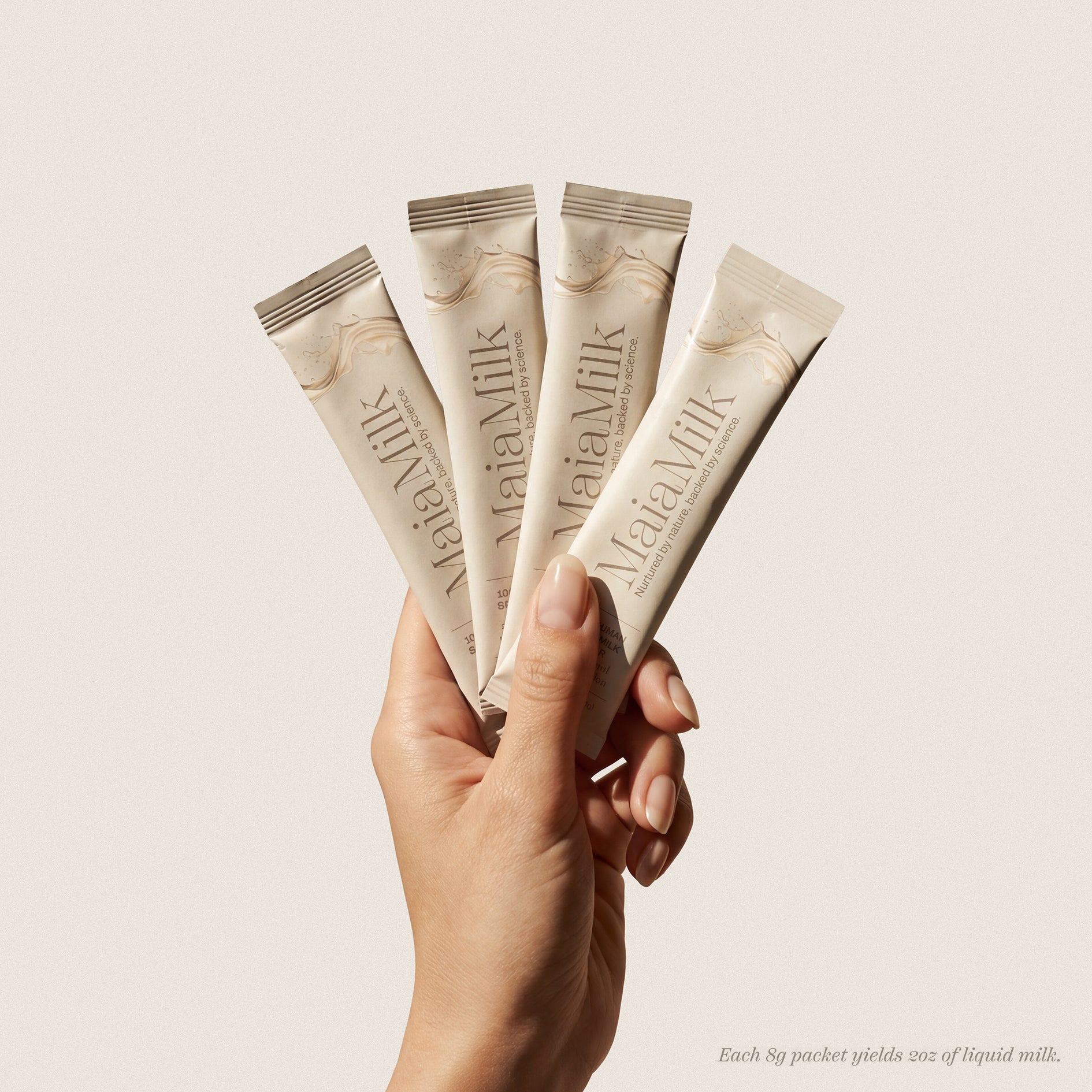
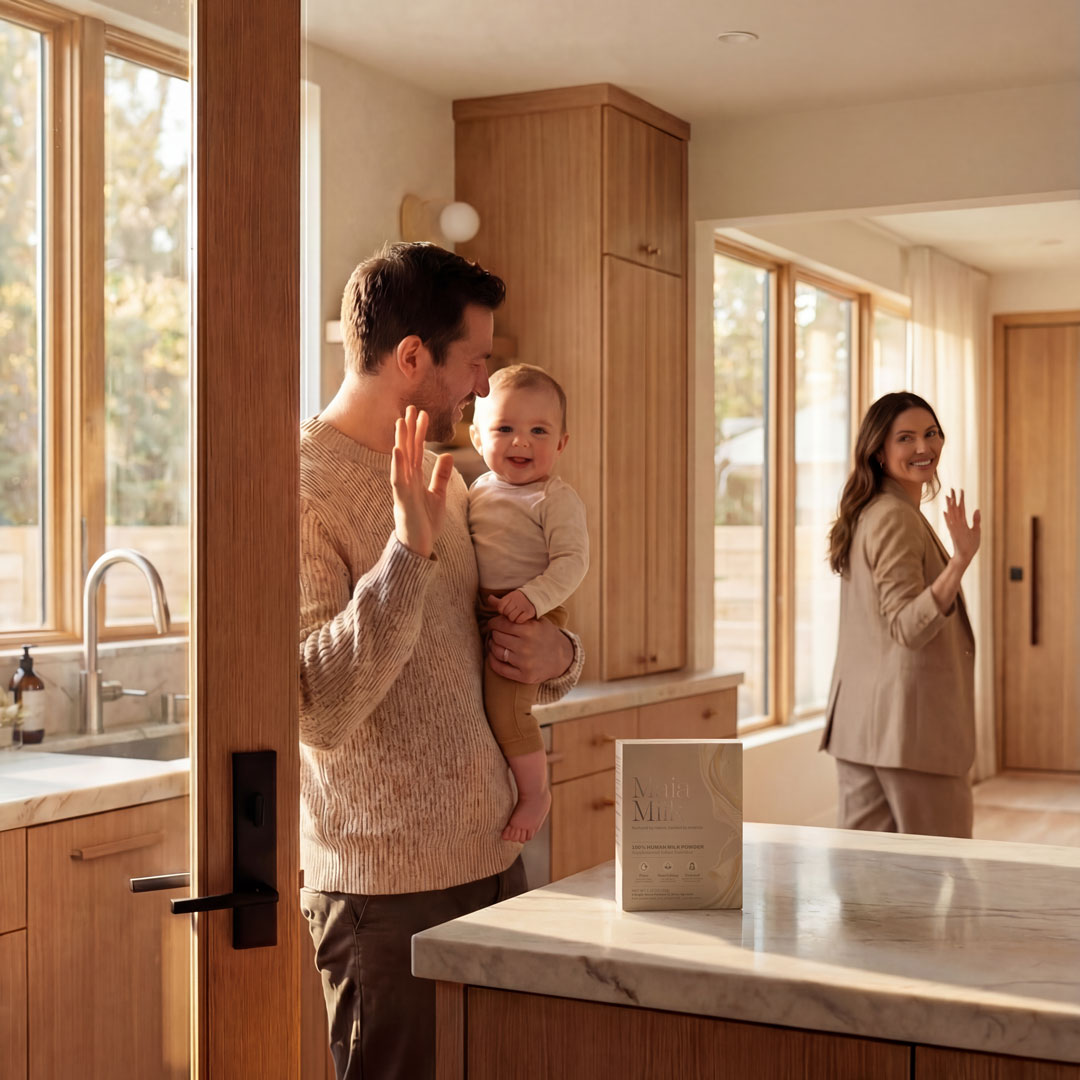
This is the specific gap MaiaMilk was built for. Shelf-stable human milk packets that mix with water mean the backup in the diaper bag does not depend on a cooler, a fridge, or a plan holding together perfectly.
Not a replacement for what you pump. A floor underneath it. Here is when families actually reach for it.
What support that lasts actually looks like
It looks like a room with a lock and a chair. A manager who moves the meeting. A calendar block nobody questions. A backup that does not require refrigeration.
Small, unglamorous, specific. Which is the only kind of support that survives past the first week back.
This post is general information, not legal advice. State and local laws may give you more than federal law does, and individual circumstances vary. For questions about your specific situation, the Department of Labor's Wage and Hour Division is the place to start.
