
Community
A little help. A lot of heart.
Tara Overton on motherhood, donor milk, and making room for a little backup.
Watch Tara’s interview
You can have the pump, the storage bags, and a very good plan. And still find yourself thinking, Okay. What now?
Feeding a baby has a way of introducing you to a version of motherhood you couldn’t quite picture beforehand. The moving parts. The mental math. The feeling that you should somehow have it all figured out.
You’re allowed to need a little help along the way.
From our Instagram · The Motherly Podcast
One small stretch at a time.
Some days, the next small step is enough. Watch Tara with Motherly host Liz Tenety, then settle in for their full conversation about motherhood, feeding, and finding your way.
She knew donor milk. Then she became a mom.
In her conversation with Motherly, our COO Tara Overton shared how personal that became. She had worked in donor milk operations before having children. But after her son arrived, balancing work and a milk supply that didn’t meet his needs brought a different perspective.
Her job gave her access to donor milk. Knowing that other parents didn’t have the same access helped shape her interest in making it available to more families.
“It’s okay to struggle, and struggle doesn’t equal failure.”
Tara Overton, speaking with Motherly
There’s room for a little backup.
Maybe you’re a planner. Maybe your days are more of a see-how-it-goes situation. Either way, having another feeding option can be something you think through before you need it.
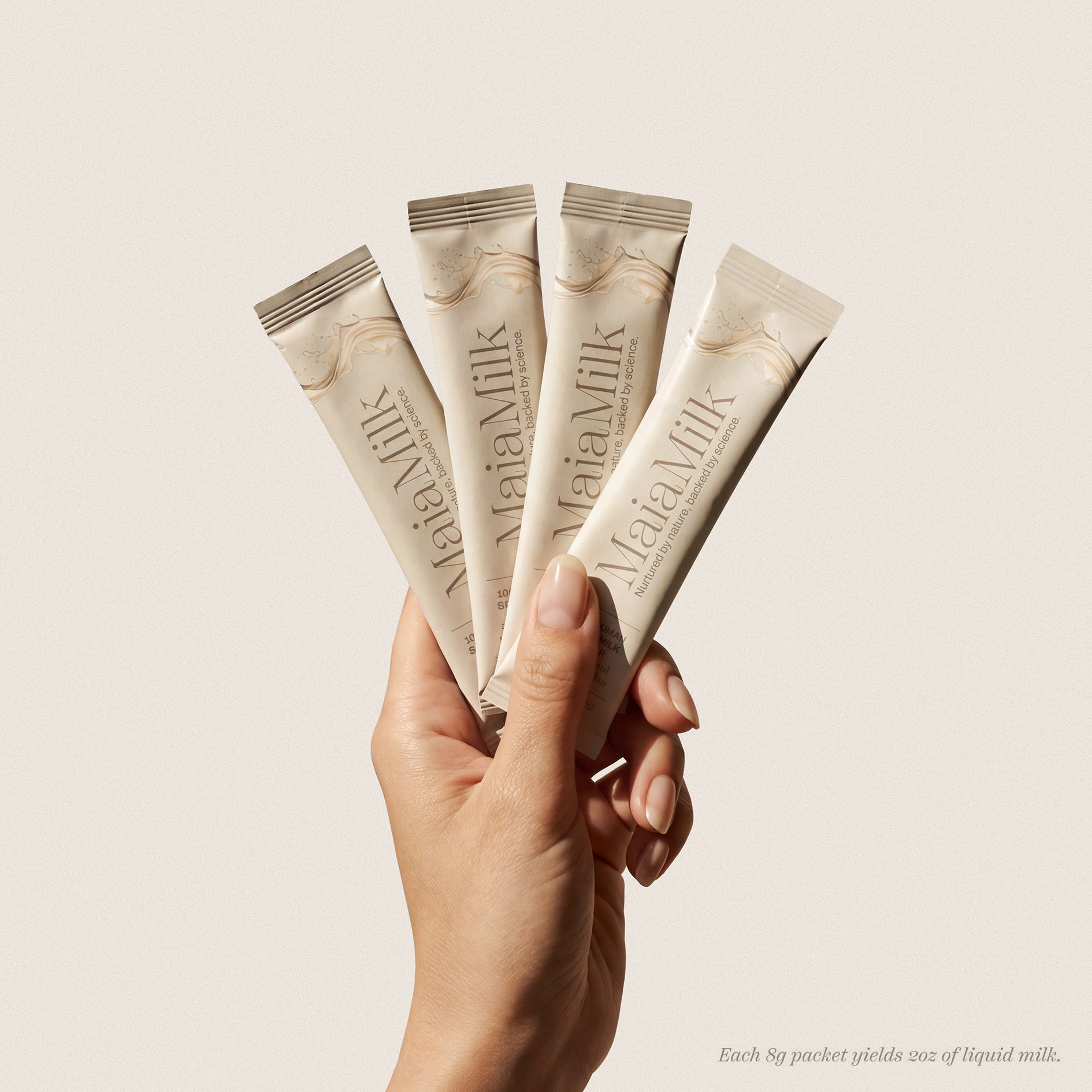
MaiaMilk is 100% human donor breast milk, pasteurized and gently freeze-dried into single-serve packets. One ingredient. Nothing added. Unopened packets are shelf-stable, so they can stay in the cupboard until it’s time to prepare them.
How that fits into your family’s routine is a conversation to have with your pediatrician. Follow the package directions for preparation, storage, and feeding.
Bring all your questions.
Where does the milk come from? How are donors screened? What happens before it reaches our home?
Those are good questions. MaiaMilk’s process includes donor health screening and blood testing, pasteurization, and testing before, during, and after processing. You can explore the details in our frequently asked questions, then talk through your baby’s needs with their healthcare provider.
You belong in the plan, too.
The person washing the bottles. Keeping track of the feeds. Remembering the extra outfit. Making the appointment.
You’re doing a lot.
Let the people around you know what would help. A meal. Someone to handle the dishes. A quiet minute without being needed. Support can look wonderfully ordinary, and you don’t have to earn it by reaching your limit first.
That’s the conversation we want to keep having here. Honest, open, and with a little more room for the person behind all that care.
References & credits
Interview and image: The Motherly Podcast, featuring Tara Overton and host Liz Tenety. The image’s pull quote is adapted from Tara’s interview remarks. Motherly wordmark: Motherly. Video: MaiaMilk’s Instagram post, July 27, 2026. Tara’s story and quotation are drawn from Amanda Murray’s MaiaMilk-sponsored feature in Motherly, updated August 27, 2026. Read the full interview on Motherly ↗
- Motherly — Donor Milk at Home: What Parents Should Know. Interview source.
- MaiaMilk — Tara Overton interview clip.
- MaiaMilk — 100% Human Milk product information.
- MaiaMilk — Frequently Asked Questions. Donor screening, processing, and preparation information.
When you’re ready to explore
A little backup, on your terms.
Get to know MaiaMilk, then talk with your pediatrician about what fits your baby’s feeding plan.
Explore MaiaMilkStay a little longer.

Motherhood Honestly
Big Love. A Little Backup.
Big love. A little backup. From shared feeds to changing plans, discover how MaiaMilk’s 100% human donor milk packets can bring more flexibility to your family’s feeding routine.
Read the story
A Little Support
Flying with Breast Milk
The 3.4 ounce rule does not apply to breast milk. Your baby does not need to be with you. And as of late 2025, TSA is legally required...
Read the story
A Little Support
Can You Mix Breast Milk and Formula?
Yes, and most families do some version of it. Here is how combination feeding actually works, the one preparation rule that matters most, and why mixing is not...
Read the story