


Can You Mix Breast Milk and Formula?
Somewhere between the exclusively breastfed ideal and the fully formula-fed reality, there is where most families actually live. Some nursing. Some pumping. A bottle at daycare. A bottle at 3am so someone else can take the shift.
That middle ground has a name. Combination feeding, or combo feeding. And the question that comes up more than almost any other is whether the two can go in the same bottle.
They can. But the order you do it in matters more than most people realize.
The one rule that actually matters
Prepare the formula first, completely and exactly as the label directs, using the specified water-to-powder ratio. Then add the breast milk to the already-prepared bottle.
Never mix powdered or concentrated formula directly into expressed breast milk.
The reason is dilution. Formula is engineered to be reconstituted with a specific amount of water, and the FDA is unambiguous about it: use the amount of water and the number of scoops listed on the label, use the scoop the manufacturer provided, and measure the water first, then add the powder. Using breast milk as the liquid instead changes the concentration of everything in the bottle.
This is not a fussy technicality. Federal labeling rules require infant formula to carry a warning that the health of your infant depends on carefully following the preparation directions. That warning is on the container for a reason.
Ready-to-feed liquid formula is already correctly prepared, so it can be combined with breast milk without an additional step.
When to keep them in separate bottles
Mixing is safe. It is not always practical.
Prepared formula has a short window, and it is actually two windows. Use it within two hours of preparing it, and within one hour from when the feeding begins. Anything left in the bottle after a feed gets thrown out, because formula plus your baby's saliva is an environment bacteria grow in.
If you are not going to use a prepared bottle within two hours, refrigerate it right away and use it within 24 hours.
If you have mixed breast milk into that bottle, your milk goes down the drain with it. La Leche League International raises this specifically as a reason to consider separate feedings: offering pumped milk first, on its own, means none of it is lost to a half-finished bottle.
The practical approach many families land on:
Offer the breast milk first
Nurse or give the pumped bottle, then follow with formula based on your baby's hunger cues. Nothing gets wasted and your baby still gets everything you made.
Mix when convenience wins
Middle of the night, in the car, handing a bottle to a caregiver who is not going to manage two containers. Mix it. The waste risk is worth the sanity.
Alternate by feed
Some feeds are breast milk, some are formula, never combined. This is the simplest option to hand to daycare.

Supply is the part nobody mentions upfront
Milk production runs on removal. The more milk that leaves, the more your body makes. When formula replaces a nursing session or a pumping session, that removal signal weakens.
This is not a reason to avoid combination feeding. It is a reason to be deliberate about it. Families who want to protect supply while supplementing generally nurse or pump first, then top up. The signal still gets sent.
Feeding your baby some human milk is not a failed version of feeding your baby all of it.
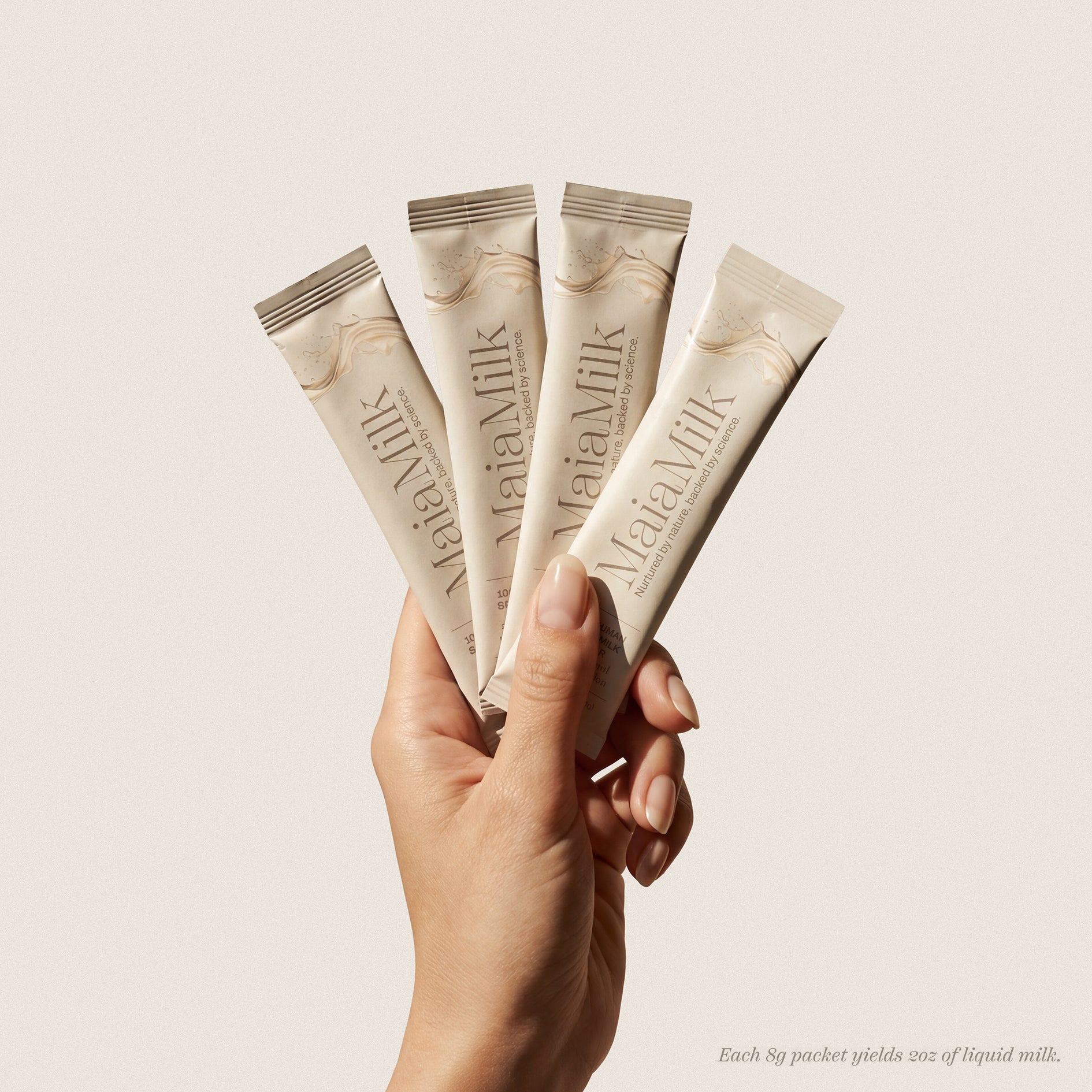
What this looks like with MaiaMilk
MaiaMilk changes the shape of this decision, because the supplement itself can be human milk.
Combination feeding does not have to mean breast milk plus formula. It can mean your milk plus donor breast milk. Same feeding flexibility, and the bottle stays human.
The packets are shelf-stable and mix with water, which means the supplement in the diaper bag does not need a cooler, a fridge, or a plan. More on when families reach for it.
The short version
You can mix. Prepare the formula fully first, then add breast milk. Consider keeping them separate when you want to protect every ounce you pumped. Offer your milk first if supply is a concern.
And if the whole reason you are reading this is that combination feeding felt like a concession, it is worth saying plainly: feeding your baby some human milk is not a failed version of feeding your baby all of it.
